Culture in the Lot & Dordogne
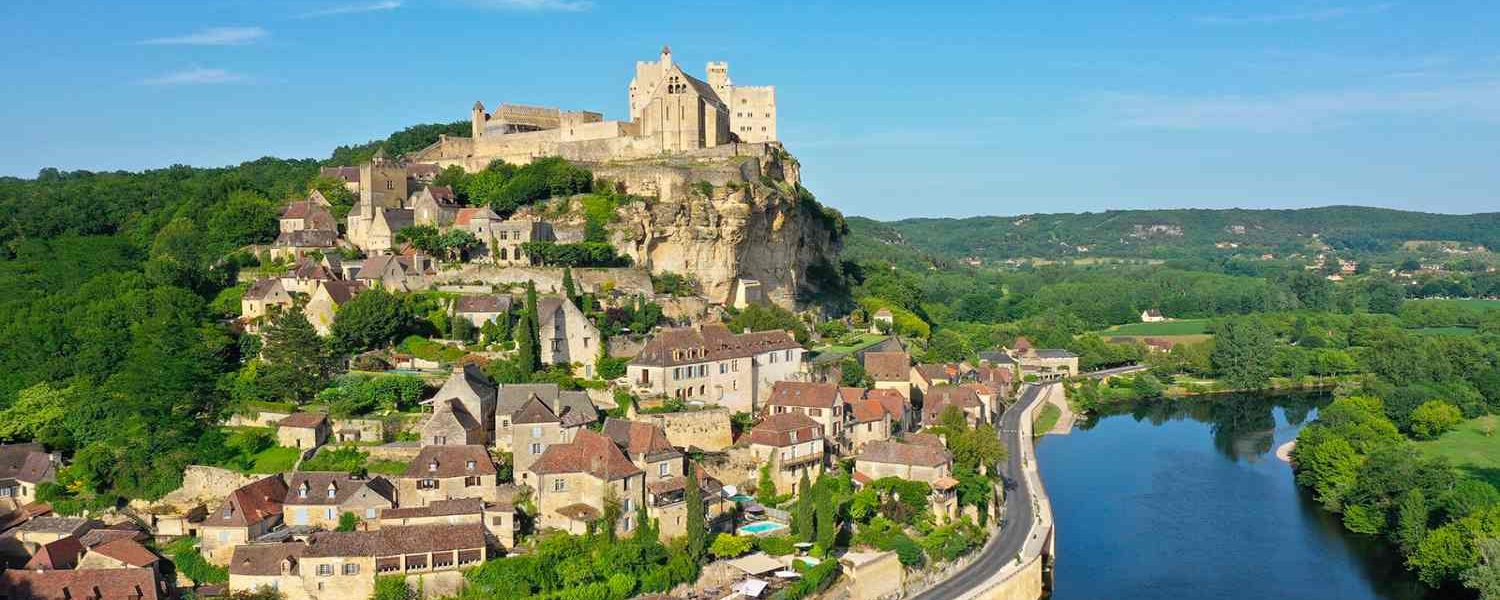
Due to the central location of our campsite it is possible to visit numerous cultural treasures of both the Lot and the Dordogne. To the south of the wine capital Cahors, to medieval Sarlat to the west, to the fairytale pilgrimage site of Rocamadour to the east. Our region is the perfect place to discover for anyone who loves medieval architecture with beautifull old villages and towns.
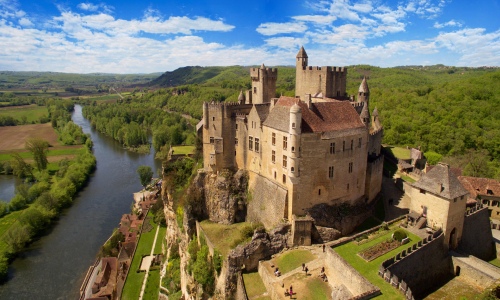
It is also the area of numerous castles and chateaus, many of which are open to the public.
Visit scenic villages

Rocamadour
Rocamadour really is a must to visit. This medieval town with the world-famous basilica, included in the UNESCO World Heritage, is artfully built against a rock wall, making the view breathtaking. Of course, don't forget to visit the famous basilica.
Saint-Cirq-Lapopie
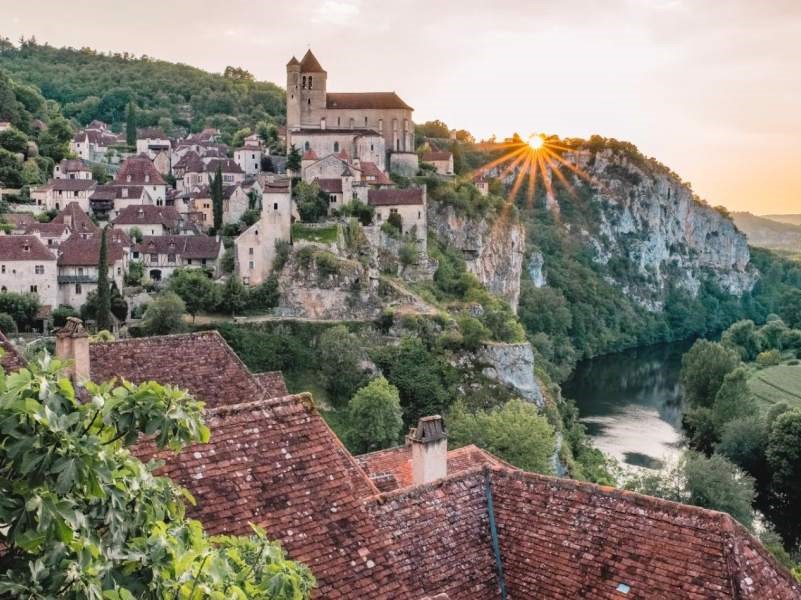
To be chosen as the Most Beautiful Village in France as a village is of course not a label that is awarded just like that. It is the case for Saint-Cirq-Lapopie. This medieval village is truly a pearl with no less than 13 historical monuments within its borders. It is also an artists' village with associated galleries and studios. You can also relax on one of the many terraces.

Sarlat, Domme en la Roque Gageac
These three towns are just steps away from each other. Ideal to visit them all in one day. Sarlat is the largest town. You feel like you are in an open-air museum with an extensive collection of monumental buildings and authentic alleys. Domme is an authentic fortified town with an impressive gate. From here you have a beautiful view over the Dordogne. there is a cave under Domme wich is open for visitors. The entrance is right in the center of Domme, next to the tourist office. La Roque Gageac is a beautiful village built against the rocks worn out by the Dordogne. Visit the Fort here and stroll through the exotic gardens.

Cahors and Puy l'Evêque
Cahors is the capital of the Lot and of the Cahors wine region. The historic center is a protected national heritage and both the Pont Valentré and the Saint-Etienne cathedral are included in the UNESCO heritage list. Ideal to combine with a visit to a winery and the nearby Puy l'Evêque, an elevated town with a beautiful view.
The above list is just a selection of the many beautiful villages that are worth visiting. The Lot has 8 villages that have been elected on the list of the most beautiful villages in France. Martel, Loubressac, Carennac, Cardaillac, Autoire and Capdenac le Haut, together with Saint-Cirq-Lapopie and Rocamadour, belong to this prestigious list.
The Dordogne has 10 Villages included in the list of the most beautiful villages in France. From this list, in addition to Domme and la Roque Gageac, Belvès, Castelnaud-chapelle, Monpazier, Beynac and Cazenac are also all within easy reach.
Visit a castle
Our region has a large number of castles. Most are open to the public and in most cases you can opt for a guided tour or a visit without a guide. Most are open to the public and in most cases you can choose between a guided or a self-guided tour.
Château de Lantis
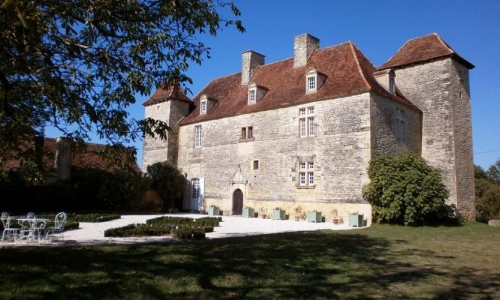
The Lantis castle in our own commune of Dégagnac dates back to the 15th century. It was abandoned and dilapidated after the 18th century but is now completely restored with many original details preserved. The castle is open for visits all year round.
Castelnau-Bretenoux
The castle, built on top of a large rock formation, dates back to the 14th century. The initially sober building was embellished in the 17th century and is now one of the finest examples of medieval military architecture.
Château de Castelnaud
The first stones for this castle were laid in the 12th century. The castle is beautifully situated above the Dordogne and contains an extensive collection of medieval weapons. In the summer season, demonstrations are given daily, showing the old crafts.
Château de Beynac
This impressively situated castle has been built over the centuries. From the 12th century main tower, the 13th century kitchen, through the Renaissance staircase to the mighty State Hall of the Baronies from the 15th century.
You can wander around the castle independently and an audio tour is available. The castle is open all year round.
Château des Milandes
Château Milandes dates back to the 15th century and is a fusion of Renaissance architecture with Gothic elements. It owes its fame, among other things, to the fact that the famous American singer – dancer – human rights activist Joséphine Baker lived here in the 50s, 60s and 70s. The castle is surrounded by beautiful gardens and is open all year round.
Visit a museum
Also take a look at a museum. There is a wide choice in the Lot. Below are some tips of nice museums in the area, and also a link to the site of the office de tourisme for an extensive list.
Zadkine museum
The Belarusian Ossip Zadkine, naturalized as a Frenchman, is a world-famous sculptor. Known in the Netherlands for the bronze statue “De Verwoeste Stad” in Rotterdam. In 1934 he bought a house in les Arques in the Lot from which he created countless works of art. The Zadkine museum is now located in this village and is entirely dedicated to his work.
Prehistoric museum
The prehistoric museum in Cabrerets is integrated in the caves Grottes du Pech Merle. Along with a visit to the caves you can also visit the museum. The museum houses 350,000 years of regional prehistoric history.
Old cars and Tractors
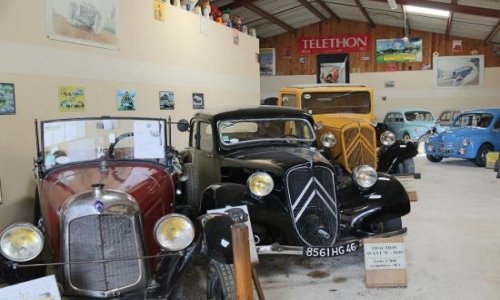
The museum with old cars, motorcycles and many agricultural vehicles in Salviac is very nice to visit. There is a very large collection, and you can finish with a drink. The museum is near the campsite, and the owner is a nice and very enthusiastic man. Everyone really has to visit this museum.
The above is just a small selection from the extensive range of museums. Click on the link of the tourist office for the full offer.
Visit a wine chateau in France's oldest wine region
The oldest wine region in France is located around Cahors. Its history goes back to the first century when the first vineyards were planted around Cahors. After many highs and lows over the centuries, the Cahors wine region reached its peak in the 18th century with exports to countries in North America, Europe and Russia.
The total grape growing area is now around 5000 hectares and around 20 million bottles are produced annually, making it a relatively small wine region. The number of “wine chateaux” is numerous and most of them are open for visits and tastings.
For anyone who loves wine, is interested in how wine is made and enjoys a tasting, it is really a must to visit a winery in this world-famous wine region.